Imagine a financial system where you, not a bank, are the primary liquidity provider, earning rewards for simply enabling others to trade. This isn't a futuristic fantasy; it's the core promise of DeFi liquidity mining. While the allure of passive income in the burgeoning world of decentralized finance is undeniable, this sophisticated strategy isn't without its own set of considerable dangers. For the intrepid investor, understanding both the immense potential and the profound pitfalls is paramount to navigating this revolutionary financial frontier successfully.
At a Glance: Key Takeaways from DeFi Liquidity Mining
- What it is: Providing cryptocurrency assets to decentralized platforms to facilitate trading, earning rewards in return.
- How it works: Deposit a pair of tokens into a "liquidity pool," receive LP tokens, then stake those LP tokens to earn additional platform-specific tokens and a share of trading fees.
- The upside: Potential for significant passive income, supporting decentralized ecosystems, and contributing to market efficiency.
- The downside: High risks including impermanent loss, smart contract vulnerabilities, rug pulls, and general market volatility.
- Success factors: Thorough due diligence on platforms, robust risk management through diversification, and continuous monitoring of market conditions.
- Key differentiator: A subset of "yield farming," distinct from "staking" which primarily secures blockchain networks.
The Big Idea: What Exactly is DeFi Liquidity Mining?
At its heart, decentralized finance (DeFi) is an ambitious movement aiming to reconstruct traditional financial services using blockchain technology, stripping away intermediaries like banks and brokers. Think loans, insurance, trading, and asset management, all operating autonomously on a transparent, immutable ledger.
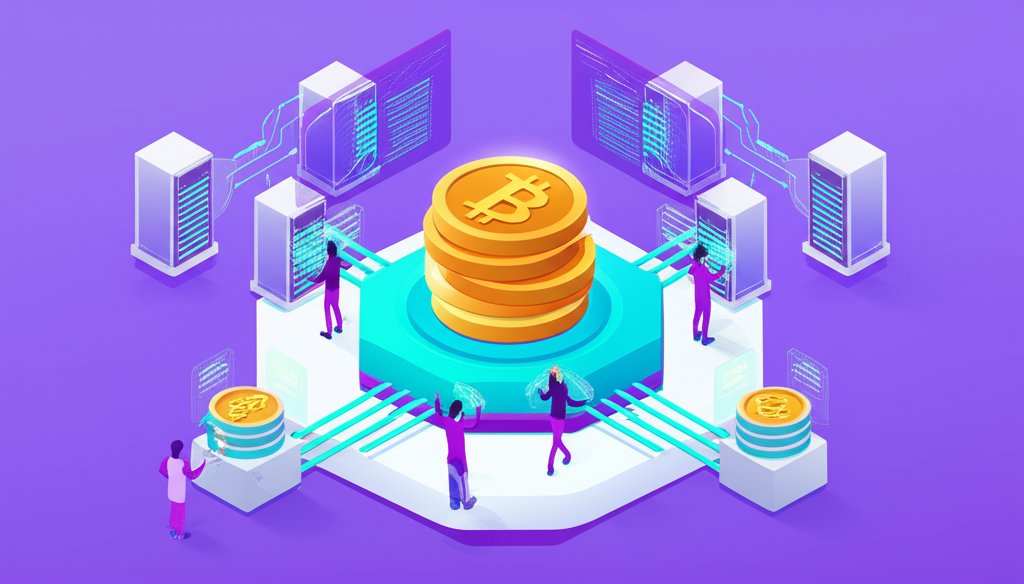
Within this innovative landscape, liquidity mining has emerged as a powerhouse mechanism. In simple terms, it's a way for you, as an individual, to contribute your crypto assets to a decentralized exchange (DEX) or lending protocol. By "pooling" your assets with those of others, you become a "liquidity provider" (LP), making it possible for others to buy and sell cryptocurrencies efficiently. In exchange for your valuable contribution, these protocols reward you with a portion of the trading fees generated by the pool, and often, with newly minted tokens from the platform itself. It's a symbiotic relationship: you provide the essential fuel, and the protocol shares its growth with you. This vital mechanism ensures that decentralized trading can occur smoothly, reducing price volatility and enhancing the overall user experience across a myriad of platforms. If you're looking for a deeper dive into the broader concept, consider Understanding DeFi mining and its foundational principles.
Your Journey into the Liquidity Pool: How It Works
Embarking on a liquidity mining venture follows a surprisingly straightforward path, though the underlying technology is anything but simple. Here’s a typical step-by-step guide:
1. Choosing Your Arena: Selecting a DeFi Platform
Your first decision involves picking the right decentralized application (dApp) or protocol. Popular choices include Uniswap, Balancer, Aave, and PancakeSwap, each with its own unique features, supported tokens, fee structures, and risk profiles. This initial selection is critical, as it dictates the potential rewards and inherent risks you'll face. Research platforms based on their security audits, team reputation, and community support.
2. Fueling the Pool: Providing Liquidity
Once you've chosen a platform, you'll need to deposit a pair of tokens into one of its liquidity pools. Most Automated Market Makers (AMMs) – the smart contracts that power these pools – require you to provide two different cryptocurrencies in equivalent dollar values. For example, if you want to provide liquidity to an ETH/USDT pool, you might deposit $500 worth of ETH and $500 worth of USDT. This balanced contribution ensures the pool maintains a relative equilibrium, allowing seamless swaps for other users.
3. Your Receipt: Receiving LP Tokens
Upon depositing your assets, the protocol issues you special tokens known as LP (Liquidity Provider) tokens. These aren't just fancy digital receipts; they represent your stake or ownership percentage in that specific liquidity pool. Think of them as shares in a mini-company, where the company is the pool itself. Holding these LP tokens is proof of your contribution and your right to a share of the pool's assets and future rewards.
4. Staking Your Claim: Earning Rewards
While holding LP tokens entitles you to a portion of the trading fees, the "mining" part often kicks in when you "stake" these LP tokens. Many platforms offer additional incentives for locking up your LP tokens in a separate smart contract, usually for a specified period. This staking action is what starts the flow of bonus rewards, typically in the form of the platform's native governance token. These extra tokens, combined with your share of trading fees, constitute your total yield from liquidity mining.
Beyond the Basics: Liquidity Mining vs. Other DeFi Plays
The world of passive income in crypto is vast, and liquidity mining often gets grouped with other strategies. Understanding the nuances helps clarify your investment approach.
Liquidity Mining vs. Staking
While both involve locking up crypto assets for rewards, their primary functions differ significantly.
- Staking is fundamental to the security of many blockchain networks, particularly those using a Proof-of-Stake (PoS) consensus mechanism. When you stake, you're helping validate transactions and secure the network, and your rewards come directly from the network for this service.
- Liquidity Mining, on the other hand, is about enabling efficient trading and lending within DeFi protocols. Your rewards come from facilitating swaps and loans, and from the incentive programs set up by the protocols themselves.
Liquidity Mining as Part of Yield Farming
Yield farming is a broader umbrella term encompassing all strategies designed to maximize returns on crypto assets. Liquidity mining is perhaps the most prominent form of yield farming, but it's not the only one. Other yield farming strategies might include:
- Lending: Depositing assets into a lending protocol (like Aave or Compound) to earn interest from borrowers.
- Borrowing with collateral: Using borrowed funds (often stablecoins) to engage in other yield-generating activities, carefully managing collateral ratios.
- Leveraged farming: Employing complex strategies involving borrowing and re-investing, which dramatically amplifies both potential gains and risks.
Liquidity mining is a direct and often accessible entry point into the world of yield farming, offering a tangible way to earn by contributing to decentralized markets.
Popular Arenas for Liquidity Miners
The DeFi landscape is bustling with platforms, each vying for liquidity. Here are a few prominent examples that have become popular choices for liquidity miners:
Uniswap: The Original AMM Powerhouse
As one of the first and largest decentralized exchanges, Uniswap operates primarily on the Ethereum blockchain, supporting ERC-20 tokens. Its simple interface and vast liquidity pools (with a total trading volume exceeding $800 billion at its peak) make it a popular entry point. LPs provide two tokens in a 50/50 ratio, earning a share of the 0.3% trading fees and, during incentive programs, UNI tokens. Uniswap’s model is a benchmark for many other AMMs.
Balancer: Diverse Pools, Unique Ratios
Also built on Ethereum, Balancer distinguishes itself by allowing liquidity pools with up to eight different tokens and flexible weighting ratios (e.g., 80/20, 60/40, or even pools with varying percentages of multiple assets). This flexibility allows for more complex strategies and potentially lower impermanent loss in certain scenarios. LPs earn trading fees and BAL tokens, the platform's native governance token.
PancakeSwap: A Speedy, Lower-Cost Alternative
For those seeking faster transactions and lower gas fees, PancakeSwap on the Binance Smart Chain (BSC) has become a formidable alternative. It supports BEP-20 tokens and mirrors many of Uniswap's functionalities, including liquidity pools and yield farming. Its cost-effectiveness and rapid transaction finality make it attractive, though it operates in a slightly more centralized ecosystem than some Ethereum-native dApps. LPs earn CAKE tokens, its native asset.
The Allure of Passive Income: Why People Mine Liquidity
The primary draw of DeFi liquidity mining is, unequivocally, the promise of passive income. But what specifically drives this appeal?
Earning Trading Fees
Every time someone swaps tokens using a liquidity pool you've contributed to, a small trading fee is charged. As a liquidity provider, you earn a proportionate share of these fees, creating a continuous revenue stream that compounds over time. For high-volume pairs, these fees can accumulate significantly.
Token Rewards & Governance
Beyond trading fees, many DeFi protocols distribute their own native governance tokens (like UNI, BAL, CAKE) as additional rewards to LPs. These tokens often have monetary value and can be traded on exchanges, further boosting your yield. Moreover, holding these governance tokens grants you voting rights in the protocol's future development, giving you a say in how the decentralized platform evolves.
Supporting the Ecosystem & Market Efficiency
For those who believe in the vision of decentralized finance, liquidity mining offers a tangible way to contribute. By providing liquidity, you’re directly enabling more efficient markets, reducing slippage (the difference between the expected price of a trade and the price at which the trade is executed), and fostering the growth of these innovative projects. It's a way to be an active participant in building the financial future.
Navigating the Treacherous Waters: Significant Risks to Understand
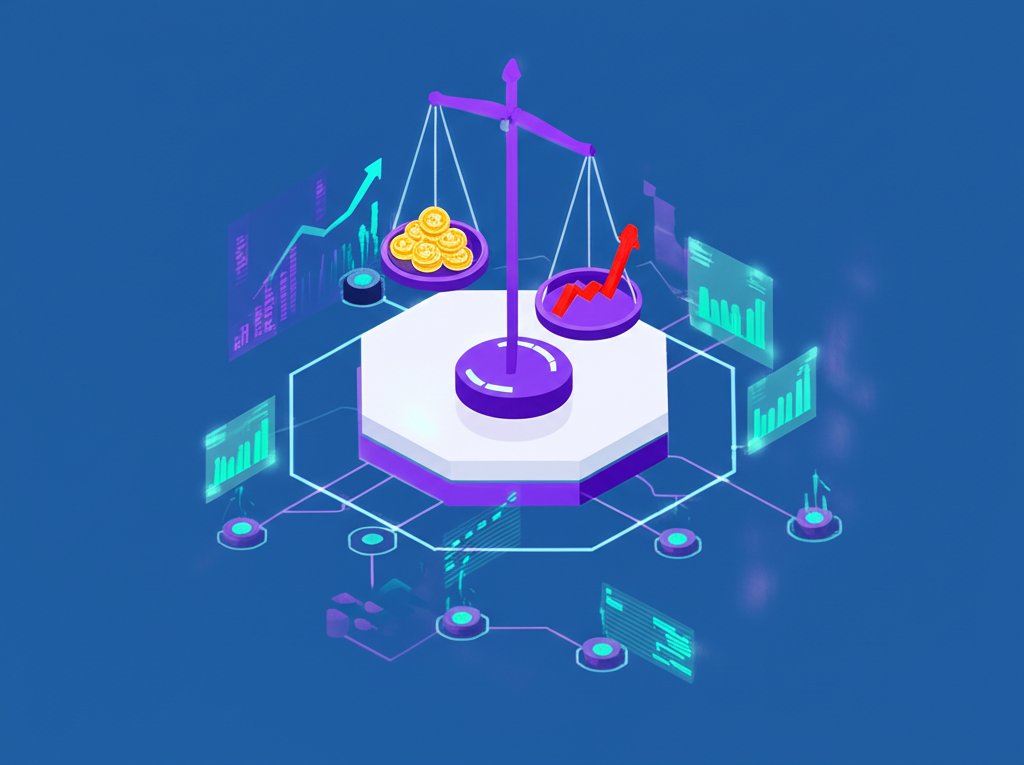
While the rewards can be enticing, a seasoned journalist would be remiss not to highlight the substantial risks inherent in DeFi liquidity mining. This isn't a "set it and forget it" strategy.
Impermanent Loss: The Silent Killer
This is arguably the most common and misunderstood risk. Impermanent loss occurs when the price of your deposited assets changes from when you initially provided liquidity. If the price of one asset in your pair skyrockets or plummets relative to the other, you could end up with a lower dollar value than if you had simply held the individual tokens outside the pool. The loss is "impermanent" because it only becomes permanent if you withdraw your assets at a time when the price discrepancy exists. While trading fees and token rewards can offset this, it’s a critical factor to model and understand before committing capital.
Smart Contract Vulnerabilities: Code is Law, But Not Perfect
DeFi protocols are powered by smart contracts—self-executing code on the blockchain. While designed to be secure and immutable, they are not infallible. Bugs, coding errors, or design flaws can create vulnerabilities that malicious actors can exploit, leading to the loss of all funds locked within the contract. Regularly audited smart contracts offer a layer of reassurance, but no audit guarantees 100% immunity from future exploits.
Security Breaches & Hacks
Even with robust smart contracts, the broader ecosystem isn't immune to security threats. Malicious attacks on a platform’s infrastructure, front-end, or associated third-party services (like oracle providers) can compromise user funds. History is unfortunately replete with examples of millions of dollars lost to such breaches.
Rug Pulls & Exit Scams: The Scammers' Playbook
A "rug pull" is a specific type of exit scam where the developers of a DeFi project suddenly abandon it, withdrawing all the liquidity from the pools and disappearing with investors' funds. These often occur with newly launched, unaudited projects offering exorbitantly high Annual Percentage Yields (APYs) to attract unsuspecting investors. The promise of incredible returns is often a red flag.
Market Volatility & Information Asymmetry
Cryptocurrency markets are notoriously volatile, with prices capable of swinging dramatically in short periods. This inherent volatility amplifies risks like impermanent loss. Furthermore, the DeFi space can suffer from information asymmetry, where early participants or insiders may have access to information that gives them an unfair advantage over newer or less connected investors, potentially manipulating markets to their benefit.
Strategies for the Savvy Miner: Minimizing Risk, Maximizing Reward
Success in liquidity mining isn't about blindly chasing the highest APY. It requires a thoughtful, strategic approach focused on risk management and continuous learning.
Due Diligence: Choosing the Right Platform
This is your first and most crucial line of defense.
- Security Audits: Prioritize platforms that have undergone multiple, reputable third-party security audits (e.g., CertiK, PeckShield). Review the audit reports for identified vulnerabilities and their resolution status.
- Team Reputation: Research the project's development team. Are they doxxed (publicly identifiable)? Do they have a proven track record in the crypto space? A transparent and experienced team is generally a good sign.
- Community Support & Activity: A strong, active, and engaged community on platforms like Discord, Telegram, and Twitter often indicates a healthy project. A vibrant community can also quickly identify and report issues.
- Decentralization: Assess the degree of decentralization. Protocols governed by a decentralized autonomous organization (DAO) where token holders vote on changes are generally more resilient and less prone to centralized control or rug pulls.
Diversification: Don't Put All Your Eggs...
The old adage holds true: never invest more than you can afford to lose. And even within that allocation, spread your investments across multiple platforms and different token pairs. This mitigates the impact if one project suffers a smart contract exploit, a rug pull, or a significant impermanent loss event. Consider diversifying across different blockchains (Ethereum, BSC, Polygon, etc.) to further reduce single-point failure risks.
Monitoring & Adaptation: The Market Never Sleeps
DeFi markets are dynamic. What offers a great yield today might be unprofitable tomorrow due to shifting token prices, new competitor protocols, or changes in reward structures.
- Track Impermanent Loss: Use tools (many third-party sites offer this) to monitor your impermanent loss in real-time.
- Watch Gas Fees: On networks like Ethereum, high gas fees can eat into your profits, especially for smaller positions or frequent rebalancing.
- Stay Informed: Follow reputable crypto news sources, project announcements, and community discussions. Be prepared to adjust your strategy—withdraw funds, switch pools, or rebalance your positions—as market conditions and protocol risks evolve.
Stablecoin Pools: A Lower-Risk Entry Point
For those new to liquidity mining or with a lower risk tolerance, providing liquidity to stablecoin pairs (e.g., USDT/DAI, USDC/BUSD) can be an attractive option.
- Reduced Impermanent Loss: Because stablecoins are pegged to a fiat currency (usually USD), their relative price fluctuations are minimal, significantly reducing the risk of impermanent loss compared to volatile crypto asset pairs.
- Consistent Yields: While yields might be lower than those offered by highly volatile asset pairs, they tend to be more predictable and less susceptible to drastic swings. This makes stablecoin pools a good choice for capital preservation while still earning passive income.
Key Terms You'll Encounter on Your DeFi Journey
Navigating DeFi requires a grasp of its specialized vocabulary. Here are a few essential terms:
- DEX (Decentralized Exchange): An autonomous trading platform built on blockchain technology, allowing peer-to-peer cryptocurrency trades without a central intermediary.
- AMM (Automated Market Maker): A type of decentralized exchange protocol that relies on mathematical formulas and liquidity pools (rather than order books) to price assets and facilitate trades. Uniswap and Balancer are AMMs.
- Yield: The returns or rewards generated from your deposited assets, often expressed as an Annual Percentage Yield (APY) or Annual Percentage Rate (APR).
- CeFi (Centralized Finance): Refers to traditional financial services (like exchanges such as Coinbase or Binance) that operate with central intermediaries, contrasting with DeFi’s decentralized approach.
- TradFi (Traditional Finance): The conventional financial system that includes banks, stock markets, and established financial institutions.
Is DeFi Liquidity Mining Right for You? A Candid Assessment
DeFi liquidity mining presents a compelling opportunity to earn passive income in a rapidly evolving financial landscape. It empowers individuals to become active participants in building decentralized markets, contributing to a more open and transparent financial system. The rewards can be substantial, offering returns far exceeding traditional savings accounts or even many conventional investments.
However, it's crucial to approach this venture with a clear understanding of its inherent complexities and significant risks. The potential for impermanent loss, smart contract exploits, and outright scams means that capital preservation should always be a primary concern. This isn't a speculative gamble; it's a sophisticated financial strategy that demands continuous learning, meticulous due diligence, and proactive risk management.
If you possess a high tolerance for volatility, a willingness to research deeply, and the discipline to monitor your investments regularly, then DeFi liquidity mining could be a powerful tool for generating wealth. But for those seeking guaranteed returns or unwilling to delve into the technical intricacies, the risks may far outweigh the potential rewards. Assess your financial goals, risk appetite, and time commitment honestly before diving into the exciting yet challenging world of decentralized finance. Your journey into the liquidity pools should be an informed one, armed with knowledge and a healthy dose of caution.